Common EV Charging Module Faults: Analysis and Solutions
The charging module serves as the core component of electric vehicle charging infrastructure, converting AC power from the grid into DC power suitable for EV batteries. Understanding common faults and their root causes is crucial for improving charging station reliability and maintenance efficiency. This article analyzes 12 common fault types to help operators and technicians quickly diagnose and resolve issues.

Fault Symptoms
The charging module temperature exceeds limits during operation, triggering over-temperature protection and interrupting the charging process.
Root Causes
- Cooling system failure: fan stoppage or dust accumulation on heat sinks
- Excessive ambient temperature: lack of shading facilities
- Sustained high-power loads causing excessive heat generation
Parameter-Level Analysis
- Temperature sensor malfunction or reading deviation
- Over-temperature protection threshold set too conservatively
Real-World Example
During summer heat, cooling fan efficiency drops due to dust accumulation. When module temperature exceeds the preset 80°C threshold, the system automatically stops charging.
2. Over-Voltage/Under-Voltage Protection Fault
Fault Symptoms
The module detects abnormal input voltage (too high or too low), activating protection protocols and interrupting charging.
Root Causes
- Unstable grid voltage fluctuations
- Poor contact or insufficient gauge of power cables
- Damaged power filter failure
Parameter-Level Analysis
- Damaged voltage detection circuit components
- Protection threshold range set too narrow
Real-World Example
Grid voltage suddenly rises to 260V (standard 220V), exceeding the 250V protection threshold, causing the charging module to immediately disconnect output.
3. Over-Current Protection Fault
Fault Symptoms
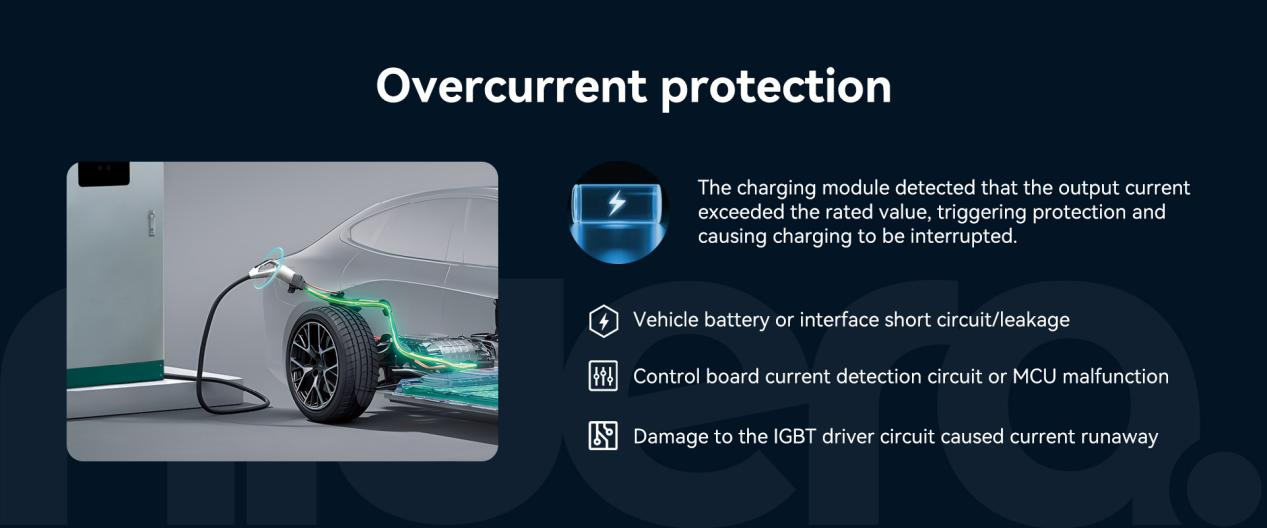
Output current exceeds rated value, triggering over-current protection and interrupting charging.
Root Causes
- Vehicle battery or interface short circuit/leakage
- Control board current detection circuit or MCU failure
- IGBT drive circuit damage causing current loss of control
Parameter-Level Analysis
- Damaged Hall sensor or shunt resistor
- Over-current protection threshold set too low
Real-World Example
Internal battery short circuit causes output current to instantly reach 150A (rated 100A), triggering over-current protection and stopping output.
4. Communication Fault
Fault Symptoms
Communication failure between charging module and host computer or vehicle prevents normal charging.
Root Causes
- Poor contact or damaged communication cables
- Mismatched communication protocol versions
- Electromagnetic interference affecting signal transmission
Parameter-Level Analysis
- Communication module hardware or software failure
- Incorrect configuration of baud rate, data bits and other parameters
Real-World Example
Aging communication cable with poor contact causes signal loss, preventing the charging station from receiving vehicle charging requests.

Fault Symptoms
Charging module suddenly interrupts during operation, unable to continue output.
Root Causes
- IGBT device damage due to overload, overheating, or short circuit
- Drive circuit component damage
- Over-voltage/over-current surge triggering protection
Parameter-Level Analysis
- Incorrect IGBT operating parameters (e.g., gate drive voltage)
- Protection circuit failure to protect in time
Real-World Example
During high-power charging, a damaged capacitor in the drive circuit prevents normal IGBT switching, causing sudden module output stoppage.
Fault Symptoms
Large output voltage fluctuations and instability, or inability to output normally.
Root Causes
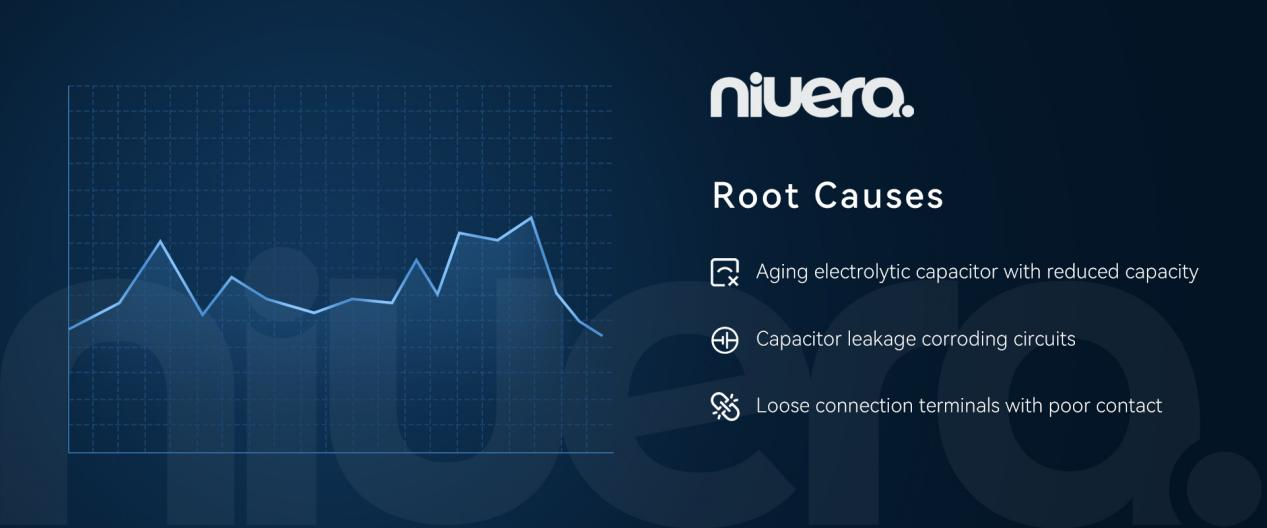
- Aging electrolytic capacitor with reduced capacity
- Capacitor leakage corroding circuits
- Loose connection terminals with poor contact
Parameter-Level Analysis
- Improper selection of capacitor capacity and voltage rating
- Damaged capacitor detection circuit components
Real-World Example
After prolonged use, electrolytic capacitor aging causes capacity reduction, leading to large output voltage fluctuations and frequent charging interruptions.
7. Power Input Fault
Fault Symptoms
Charging module fails to start or frequently restarts.
Root Causes
- Excessive grid voltage fluctuations
- Poor contact, breakage, or aging of power cables
- Damaged power filter
Parameter-Level Analysis
- Damaged input voltage detection circuit components
- Input voltage protection range set too narrow
Real-World Example
In areas with unstable power supply, frequent grid voltage fluctuations exceed the 180V-260V range, causing frequent module restarts.
8. Control Board Fault
Fault Symptoms
Charging module cannot recognize or respond to control signals.
Root Causes
- MCU damage due to static electricity or over-voltage
- Damaged communication interface hardware or configuration errors
- Temperature, current and other sensor failures
Parameter-Level Analysis
- MCU firmware version mismatch or defects
- Improper control parameter settings (e.g., PID parameters)
Real-World Example
After a lightning strike, MCU over-voltage damage prevents recognition of host computer control signals, preventing charging from starting.
9.Unstable Output Voltage/Current
Fault Symptoms
Large output voltage or current fluctuations, low charging efficiency or interruption.
Root Causes
- Damaged voltage/current feedback circuit components
- PWM signal generation circuit failure
- Damaged filter capacitors or inductors
Parameter-Level Analysis
- Improper feedback gain, integration time and other parameters
- Incorrect PWM frequency and duty cycle parameter settings
Real-World Example
Damaged resistor in voltage feedback circuit causes signal distortion, leading to output voltage fluctuations and vehicle BMS interrupting charging.
10.Insulation Fault
Fault Symptoms
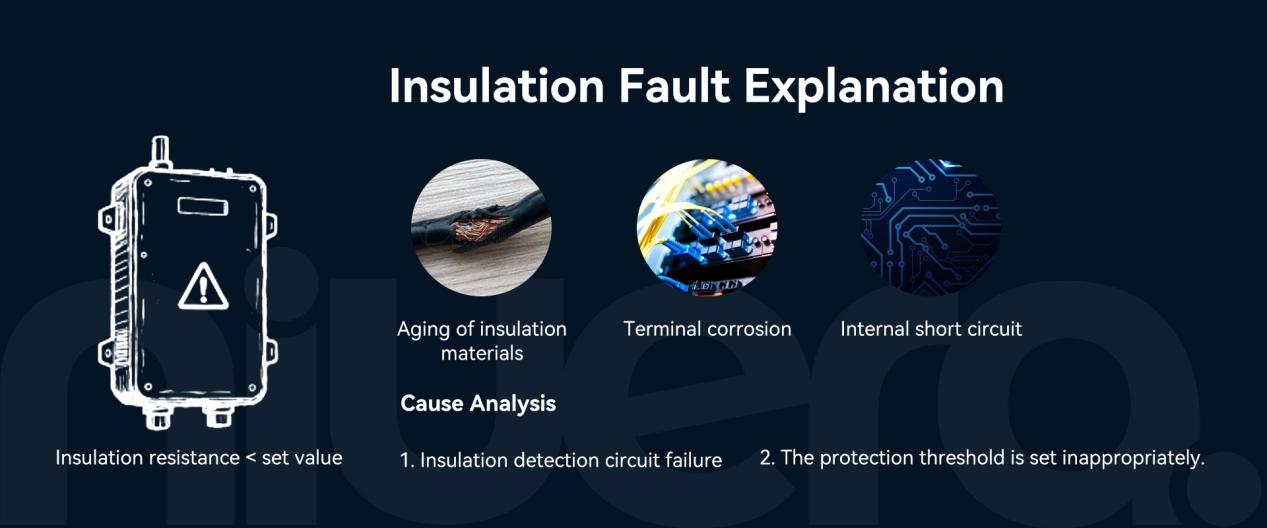
Detected insulation resistance below standard, triggering insulation protection.
Root Causes
- Aging insulation materials from prolonged use
- Moisture or corrosion of connection terminals
- Internal module short circuit
Parameter-Level Analysis
- Damaged insulation detection circuit components
- Insulation protection threshold set too high
Real-World Example
In humid environments, terminal corrosion reduces insulation resistance to 500kΩ (standard ≥1MΩ), triggering protection and stopping output.
11.Electromagnetic Compatibility (EMC) Issues

Fault Symptoms
Charging module affected by electromagnetic interference, unstable operation.
Root Causes
- External electromagnetic interference (radio equipment, high-voltage lines, etc.)
- Insufficient internal electromagnetic shielding
Parameter-Level Analysis
- EMC design deficiencies, insufficient shielding measures
- Insufficient filter performance
Real-World Example
Charging station located near high-voltage transmission lines experiences electromagnetic interference causing internal signal disruption and frequent charging interruptions.
12. Software Fault
Fault Symptoms
Charging module fails to start or functions abnormally.
Root Causes
- Firmware version mismatch
- Firmware upgrade interruption causing corruption
- Unresolved firmware defects
Parameter-Level Analysis
- Incomplete firmware update file transfer
- Configuration file corruption or loss
Real-World Example
Sudden power loss during firmware upgrade causes incomplete update, preventing module startup and displaying "firmware error".
Conclusion
Charging module faults involve multiple aspects including temperature management, power systems, communication protocols, and electronic components. Regular maintenance, proper parameter configuration, and quality installation environments are key to ensuring stable charging station operation. Through systematic fault diagnosis procedures, operators can significantly improve equipment reliability, reduce maintenance costs, and enhance user charging experience.
EV Charging Module Efficiency Explained: Achieving 97%+ Power Conversion